Tiger’s Eye Gemstone Benefits: Unlocking Courage & Clarity
Some gemstones are simply beautiful. Others carry whispers of power. Tiger&rsquo...

By admin
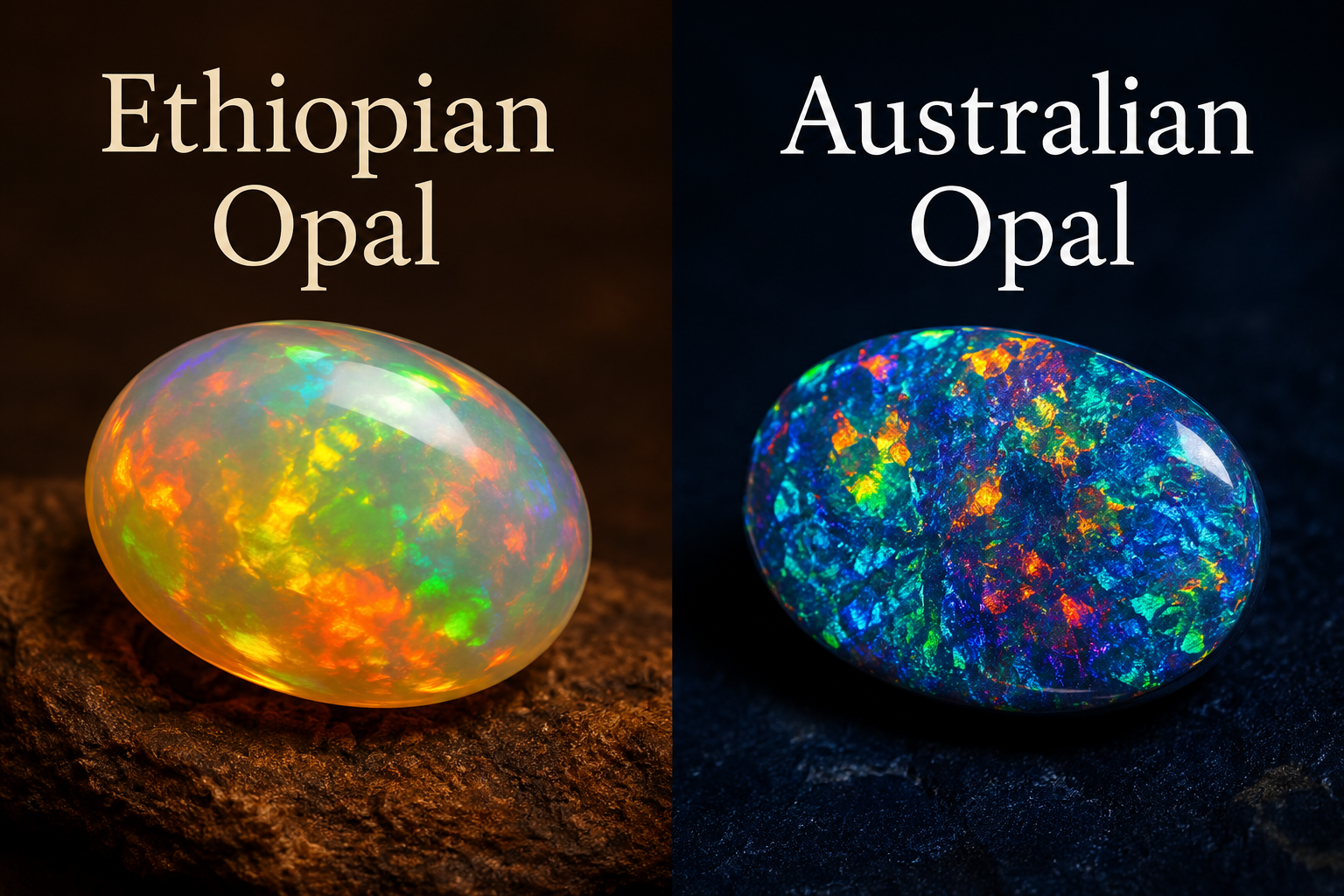
Ethiopian opal and Australian opal are both 100% natural gemstones — but they differ significantly in formation, durability, color play, and price. Ethiopian opal is more affordable, highly transparent, and known for dramatic color flashes, but is hydrophane (absorbs water). Australian opal is more durable, stable, and commands higher prices — with black opal from Lightning Ridge being among the world's most valuable gems. This complete 2026 guide compares both side-by-side to help you choose the right opal for your jewelry, collection, or budget.
Opal is one of the most unique and mesmerizing gemstones in the world — famous for its play-of-color, the optical phenomenon where the stone flashes a full rainbow of colors as it moves under light. Unlike most gemstones that reflect a single hue, opal can display red, orange, green, blue, and violet simultaneously.
Chemically, opal is a form of hydrated silica (SiO₂·nH₂O) — meaning it contains water within its structure. This water content (typically 3–21%) is what gives opal its unique optical properties and also makes it sensitive to heat and dryness. Opal is also the official birthstone for October and the gemstone for the 14th wedding anniversary.
Today, two origins dominate the global opal market: Ethiopia and Australia. Though both produce stunning stones, they are fundamentally different in almost every way — from how they formed millions of years ago to how they behave in your jewelry today.
Before diving into each opal in detail, here is a complete comparison table of the most important differences:
| Factor | Ethiopian Opal | Australian Opal |
|---|---|---|
| Origin | Welo Province, Ethiopia (Wollo) | Lightning Ridge, Coober Pedy, Queensland |
| Formation | Volcanic (igneous rock — rhyolite) | Sedimentary (sandstone, claystone) |
| Discovery | 1994 (commercial: 2008) | 1800s (commercial: late 19th century) |
| Hydrophane | Yes — absorbs water, can change color when wet | No — non-porous, stable |
| Transparency | Translucent to crystal-clear | Translucent to opaque |
| Color Play | Broad, sweeping, dramatic flashes | Intense, tight, intricate patterns |
| Body Tone | White, crystal, honey, brown | White, black, grey, crystal, boulder |
| Durability | Moderate — more sensitive to water & heat | High — very stable for everyday jewelry |
| Hardness (Mohs) | 5.5 – 6.0 | 5.5 – 6.5 |
| Price Range | $10 – $1,000+ per carat | $30 – $50,000+ per carat |
| Best For | Pendants, earrings, budget jewelry | Rings, heirlooms, investment pieces |
| Market Share | Growing rapidly since 2008 | ~90% of world's precious opal supply |
Ethiopian opal — also called Welo opal (named after the Wollo Province where most deposits are found) — is the newer player in the global gemstone market, but has rapidly become one of the most popular opals worldwide since commercial mining began in 2008.
Ethiopian opals formed within volcanic rock formations. The silica-rich solutions filled cavities in volcanic rocks, eventually hardening into opal. The soil contains a mix of minerals from volcanic activity, which gives Ethiopian opals their hydrophane nature — a porous quality that allows them to absorb water.
Ethiopian Opal — Key Traits
Australian Opal — Key Traits
The most important thing to understand about Ethiopian opal is its hydrophane nature. Ethiopian opals have a unique hydrophane quality, meaning when wet, they can absorb water and change appearance. This feature can make them appear more translucent or even temporarily alter their color.
Once the stone dries completely, it returns to its original appearance. However, this means Ethiopian opal should never be soaked in water, stored in humid conditions, or cleaned with ultrasonic machines. For jewelry types like pendants and earrings where the stone has minimal contact with water, Ethiopian opal performs beautifully for years.
| Type | Body Color | Characteristics | Value |
|---|---|---|---|
| Welo Crystal Opal | Transparent / Crystal-clear | Vivid play-of-color visible through body; most prized | High |
| Welo White Opal | Milky White | Classic look; bright play-of-color on white background | Medium |
| Ethiopian Honey Opal | Yellow / Honey / Orange | Warm earthy tones; unique warm fire play | Medium–High |
| Ethiopian Black Opal | Dark Brown / Smoky | Often treated (smoked); rivals Australian black opal look | Medium |
| Mezezo Opal | Dark / Chocolate Brown | From Mezezo region; more stable than Welo; intense fire | High |
Australian opal is the gold standard of the global opal industry. Australia dominates the global opal market, supplying over 90% of the world's precious opal. With a mining history stretching back over 130 years, Australian opal has built an unmatched reputation for quality, durability, and value — especially the legendary black opal from Lightning Ridge.
Australian opals formed in sedimentary environments millions of years ago. Silica-rich water slowly deposited layers of opal in sandstone and claystone formations. This slower formation process created more stable stones. The stable sedimentary soil contributes to the high quality, durability, and vibrant color play of Australian opals, including their renowned black base color.
| Type | Origin | Body Color | Price Per Carat (USD) |
|---|---|---|---|
| Black Opal | Lightning Ridge, NSW | Dark / Black (N1–N4) | $500 – $50,000+ |
| Dark Opal | Lightning Ridge, Mintabie | Dark Grey (N4–N6) | $100 – $5,000 |
| Boulder Opal | Queensland (Winton, Yowah, Koroit) | Ironstone matrix | $30 – $3,500 |
| White / Light Opal | Coober Pedy, South Australia | White / Cream | $10 – $300 |
| Crystal Opal | Coober Pedy, Lightning Ridge | Transparent / Semi-clear | $50 – $5,000 |
Australian opals tend to be more expensive due to limited supply, higher durability, historical market dominance, and rare varieties like black opal. The rarest variety — Lightning Ridge black opal — commands prices up to $50,000 per carat for exceptional specimens. Australian opal prices range from under $10 per carat for commercial-grade white opal to over $50,000 per carat for exceptional black opal with rare patterns and dominant red fire.
Both opals are famous for their play-of-color — but they look and feel very different. Understanding this difference is key to choosing which opal suits your taste.
| Color Factor | Ethiopian Opal | Australian Opal |
|---|---|---|
| Pattern Style | Large, sweeping, watercolor-like flashes | Tight, intense, intricate patterns (pinfire, harlequin) |
| Color Range | Warm tones: orange, yellow, red, green flashes | Full rainbow; black opal shows vivid red, blue, green |
| Rarest Color | Vivid red play-of-color | Dominant red harlequin (most valuable in world) |
| Appearance | Dreamlike, transparent, jelly-like body | Deep, bold, opaque to semi-transparent |
| Light Behavior | Color floats inside the stone | Color blazes on the surface |
| Best Viewed | All lighting conditions | Incandescent / natural daylight for black opal |
Australian opals often have more intense, smaller color patterns packed tightly together. Ethiopian opals tend to have larger, more sweeping color flashes that can be absolutely dramatic.
Color Verdict: If you want bold, dramatic, large color flashes with a dreamlike quality — Ethiopian opal. If you want rich, intense, tight-patterned play-of-color on a dark background — Australian black opal.
Durability is the most critical practical difference between these two opals — especially important for jewelry buyers choosing a stone for everyday wear.
| Durability Factor | Ethiopian Opal | Australian Opal |
|---|---|---|
| Hardness (Mohs) | 5.5 – 6.0 | 5.5 – 6.5 |
| Water Sensitivity | High — hydrophane, absorbs water | Low — non-porous, water resistant |
| Crazing Risk | Higher — can crack if dehydrated rapidly | Lower — very stable structure |
| Heat Sensitivity | More sensitive — avoid direct heat | Less sensitive — more stable |
| Everyday Ring Wear | Not recommended without bezel protection | Yes, with proper setting |
| Pendants / Earrings | Excellent — highly recommended | Excellent |
| Longevity | Long-lasting with proper care | Very long-lasting; heirloom quality |
Durability Verdict: For everyday rings or bracelets — choose Australian opal. For pendants and earrings (or occasional wear rings with bezel setting) — Ethiopian opal is perfectly safe and beautiful.
Price is often the deciding factor for most buyers. Here is a comprehensive breakdown of what you can expect to pay in 2026 for both types:
| Grade | Color Play | Clarity | Price Per Carat (USD) |
|---|---|---|---|
| Commercial | Faint / patchy | Visible imperfections | $10 – $30 |
| Standard | Moderate color flashes | Slightly included | $30 – $100 |
| Fine | Vivid multi-color play | Eye-clean | $100 – $300 |
| Premium | Bright full-spectrum color | Clean, crystal body | $300 – $600 |
| Collector | Rare red-dominant Welo, 5ct+ | Near flawless | $600 – $1,000+ |
| Type | Origin | Price Per Carat (USD) |
|---|---|---|
| White / Light Opal | Coober Pedy | $10 – $300 |
| Boulder Opal | Queensland | $30 – $3,500 |
| Crystal Opal | Coober Pedy / Lightning Ridge | $50 – $5,000 |
| Dark Opal | Lightning Ridge / Mintabie | $100 – $5,000 |
| Black Opal | Lightning Ridge | $500 – $50,000+ |
Price Verdict: Ethiopian opal prices are typically 80 to 90% less per carat than comparable Australian stones. For buyers wanting maximum visual impact at an accessible price — Ethiopian opal wins. For investment and heirloom pieces — Australian opal is unmatched.
Both opals make stunning jewelry — but each shines in specific applications. Here is how to match your opal choice to your jewelry needs:
| Jewelry Type | Ethiopian Opal | Australian Opal |
|---|---|---|
| Pendants / Necklaces | Excellent — highly recommended | Excellent |
| Earrings (Studs / Drops) | Excellent — very popular choice | Excellent |
| Everyday Rings | Use bezel setting only | Good with proper setting |
| Occasion Rings | Good with care | Excellent |
| Bracelets | Occasional wear only | Good with bezel set |
| Statement Pieces | Dramatic large stone pieces | Luxury collector jewelry |
| Investment / Heirloom | Moderate — growing value | Excellent long-term value |
| Budget Gifting | Best choice under $100 | Limited options at low price |
925 Sterling Silver is the most popular and most beautiful setting for both Ethiopian and Australian opal. The cool silver tone creates stunning contrast against opal's warm, colorful play-of-color. At GR Silver Designs International, all our opal jewelry is crafted in certified 925 sterling silver — handmade in Jaipur by skilled artisans.
Shop Natural Ethiopian Opal & Australian Opal Jewelry — Handcrafted in Jaipur. 925 Sterling Silver. Natural Stones. Ships Worldwide.
Opals require more care than harder gemstones like sapphire or diamond. Here are the essential care rules for both Ethiopian and Australian opal:
Here is the final verdict based on what matters most to you:
| Your Priority | Best Choice | Why |
|---|---|---|
| Budget under $100 | Ethiopian Opal | Stunning play-of-color at accessible prices |
| Everyday pendant / earrings | Ethiopian Opal | Safe for protected settings; beautiful daily wear |
| Everyday ring | Australian Opal | More stable, non-hydrophane, durable |
| Long-term investment | Australian Opal | Black opal especially holds and appreciates in value |
| Dramatic, large color flashes | Ethiopian Opal | Larger sweeping patterns, dreamlike appearance |
| Intense, deep color on dark base | Australian Black Opal | Unmatched depth and intensity of color play |
| Gift under $50 | Ethiopian Opal | Best visual impact at lowest price point |
| Heirloom / collector piece | Australian Opal | Classic market value, higher stability, heritage stone |
| October birthstone jewelry | Either | Both are 100% natural opals — personal preference wins |
Bottom Line: Choose Ethiopian opal if you want maximum color impact at an affordable price for pendants and earrings. Choose Australian opal if you want the most durable, stable, and valuable opal for rings, heirlooms, or long-term investment. Both are genuine, beautiful natural gemstones — and at GR Silver Designs, we carry both.
Shop both Ethiopian and Australian Opal jewelry at GR Silver Designs International — directly sourced, handcrafted in Jaipur. Natural stones. 925 sterling silver. Worldwide shipping.
The main difference is formation and durability. Ethiopian opal forms in volcanic rock, is hydrophane (absorbs water), more affordable, and has large sweeping color flashes. Australian opal forms in sedimentary rock, is non-porous, more stable and durable, commands higher prices, and has intense tight color patterns. Australian black opal is the most valuable variety.
Yes, Ethiopian opal is 100% real and natural opal. It is a genuine hydrated silica gemstone mined from the Wollo Province of Ethiopia. Some Ethiopian opals are treated (smoked or dyed) to enhance appearance — always ask your seller if the stone is natural and untreated.
Australian opal is generally more valuable, especially black opal from Lightning Ridge which can sell for $500 to $50,000+ per carat. Ethiopian opal is more affordable, ranging from $10 to $1,000+ per carat. Ethiopian opal prices are typically 80–90% lower than comparable Australian stones, though collector-grade Welo opals are rising in value.
Ethiopian opal is hydrophane — meaning it has a porous structure that absorbs water due to its volcanic origin. When wet, the stone temporarily becomes more transparent and can temporarily lose or shift its play-of-color. Once completely dry, it returns to its original appearance. This is a natural property, not a defect.
Ethiopian opal can be worn daily in pendants and earrings where the stone is protected from water and impact. For rings worn daily, it is safer to use a bezel setting and to remove the jewelry when washing hands or doing water-related activities. With proper care, Ethiopian opal jewelry lasts for many years.
Ethiopian opal is primarily found in the Wollo (Welo) Province of northern Ethiopia, near the town of Wegel Tena. Commercial deposits were first discovered in 2008. Other producing regions include Mezezo and Shewa Province. The Welo Province produces the finest and most abundant Ethiopian opal in 2026.
Australian opal is primarily found in three regions: Lightning Ridge in New South Wales (famous for black opal), Coober Pedy in South Australia (world's largest opal field, famous for white opal), and Queensland (famous for boulder opal from Winton, Yowah, and Koroit areas).
Clean Ethiopian opal jewelry with a slightly damp soft cloth and wipe gently. Dry immediately with a clean, dry cloth. Never soak in water, never use ultrasonic cleaners, and never expose to harsh chemicals or perfumes. Remove jewelry before swimming, bathing, or washing dishes.
Yes. Opal is the primary birthstone for October, along with tourmaline. Both Ethiopian and Australian opal are considered genuine October birthstones. Opal is also the gemstone for the 14th wedding anniversary.
Both Ethiopian and Australian opal pair beautifully with 925 sterling silver. Ethiopian crystal opal especially looks stunning in silver settings as the cool metal enhances the stone's transparent body and vivid color play. At GR Silver Designs International, all opal jewelry is handcrafted in 925 sterling silver in Jaipur, India.
Ethiopian opal and Australian opal are both spectacular natural gemstones — each with its own unique beauty, character, and strengths. There is no universally "better" opal. The right choice depends entirely on your budget, how you plan to wear it, and what aesthetic you love most.
If you want an affordable, dramatic, crystal-clear stone with large sweeping color flashes for a pendant or earrings — Ethiopian Welo opal is your gem. If you want a durable, stable, intensely patterned stone for an everyday ring or a long-term collector investment — Australian opal is your answer.
At GR Silver Designs International, we carry both natural Ethiopian opal and Australian opal — directly sourced from origin mines, hand-set in certified 925 sterling silver by skilled artisans in Jaipur, India. Whether you are buying for yourself, as a gift, or for your jewelry business — we ship worldwide with authenticity and care.
Explore More at GR Silver Designs
We have served more than 700 customers
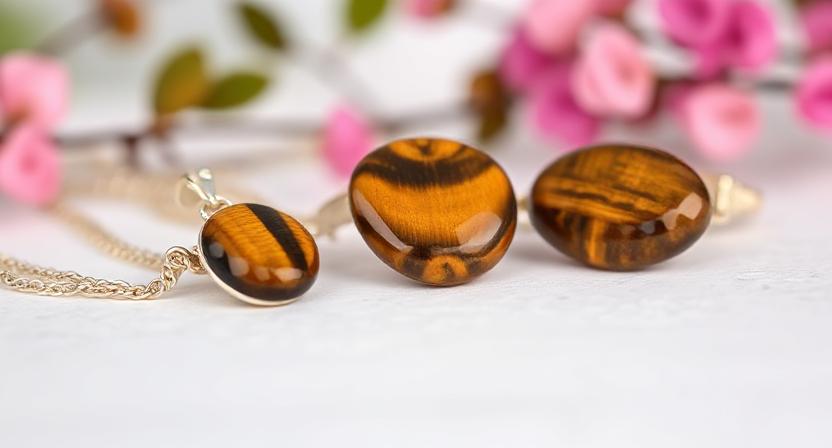
Some gemstones are simply beautiful. Others carry whispers of power. Tiger&rsquo...
The pair of women and jewelry is truly magical. A famous personality has said, &...
Let’s live your dreamy proposal: the sun is setting down, that orange-colo...
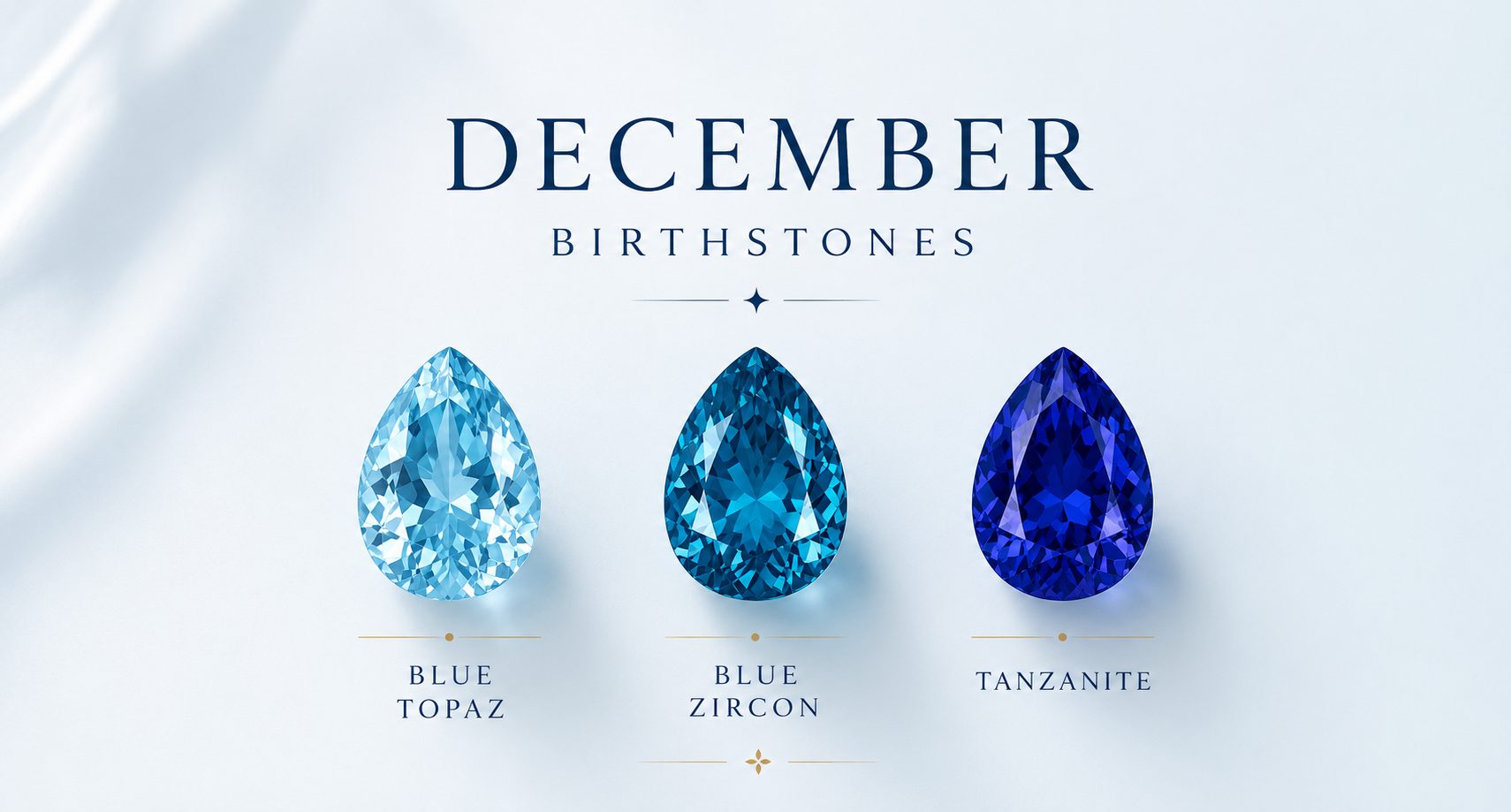
December Birthstones: A Winter Tale of Three Gems December is just not the la...
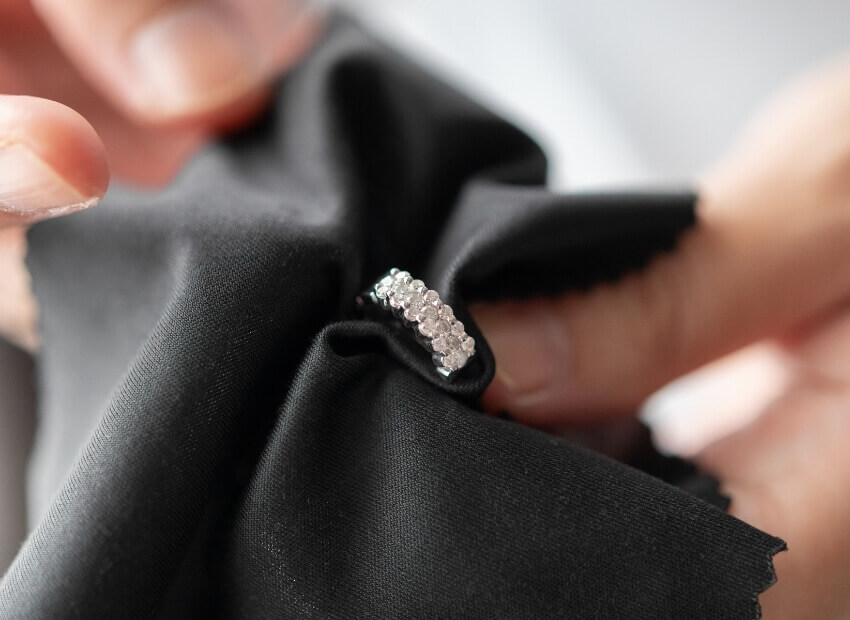
What pops to your head when you hear terms like "925 silver" and "...
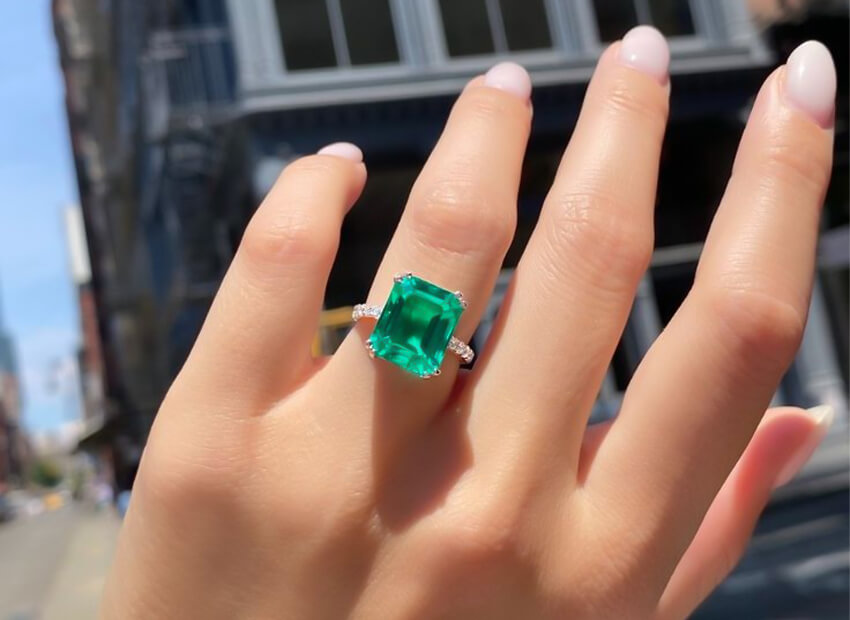
Emeralds are known for their deep green color and royal appeal. They are the thi...
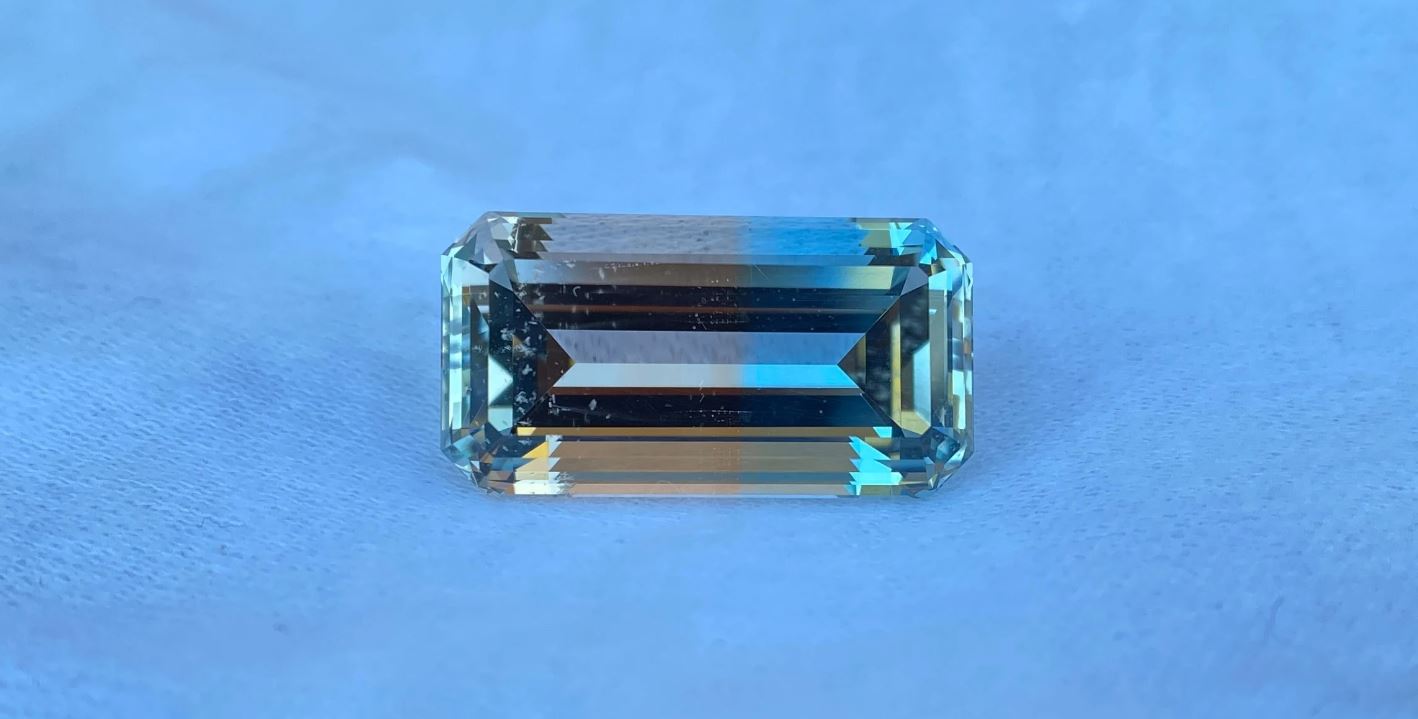
Polychrome topaz earns its name due to its bi-color appeal. The natural stone di...
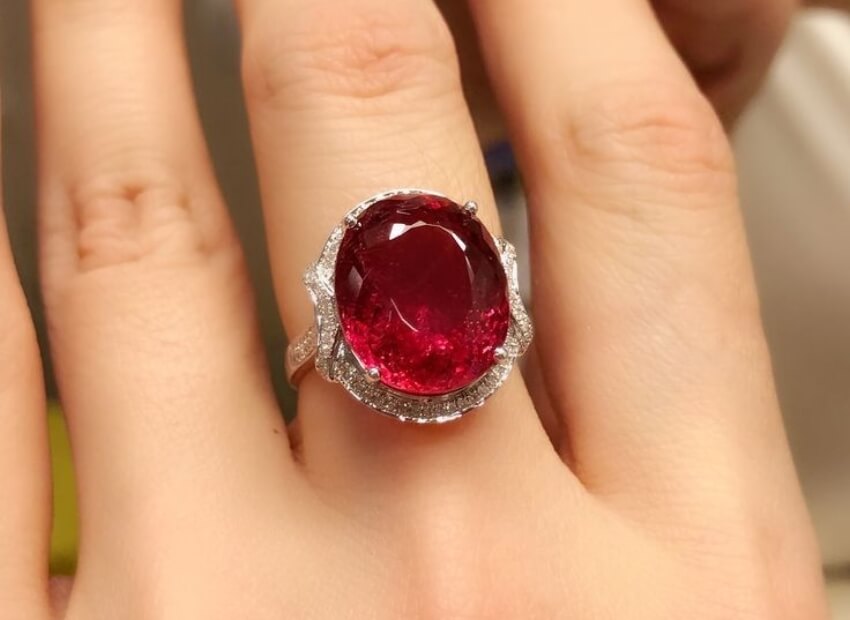
Rubellite is a gem designed for passion, power, and exalted beauty. Closely simi...
Discover our handcrafted silver treasures and add something beautiful.
Explore Collections