How to Choose the Right Wholesale Fashion Jewelry Supplier?
Introduction Choosing a jewelry supplier looks easy until you actually start...

By admin | 7th July 2026
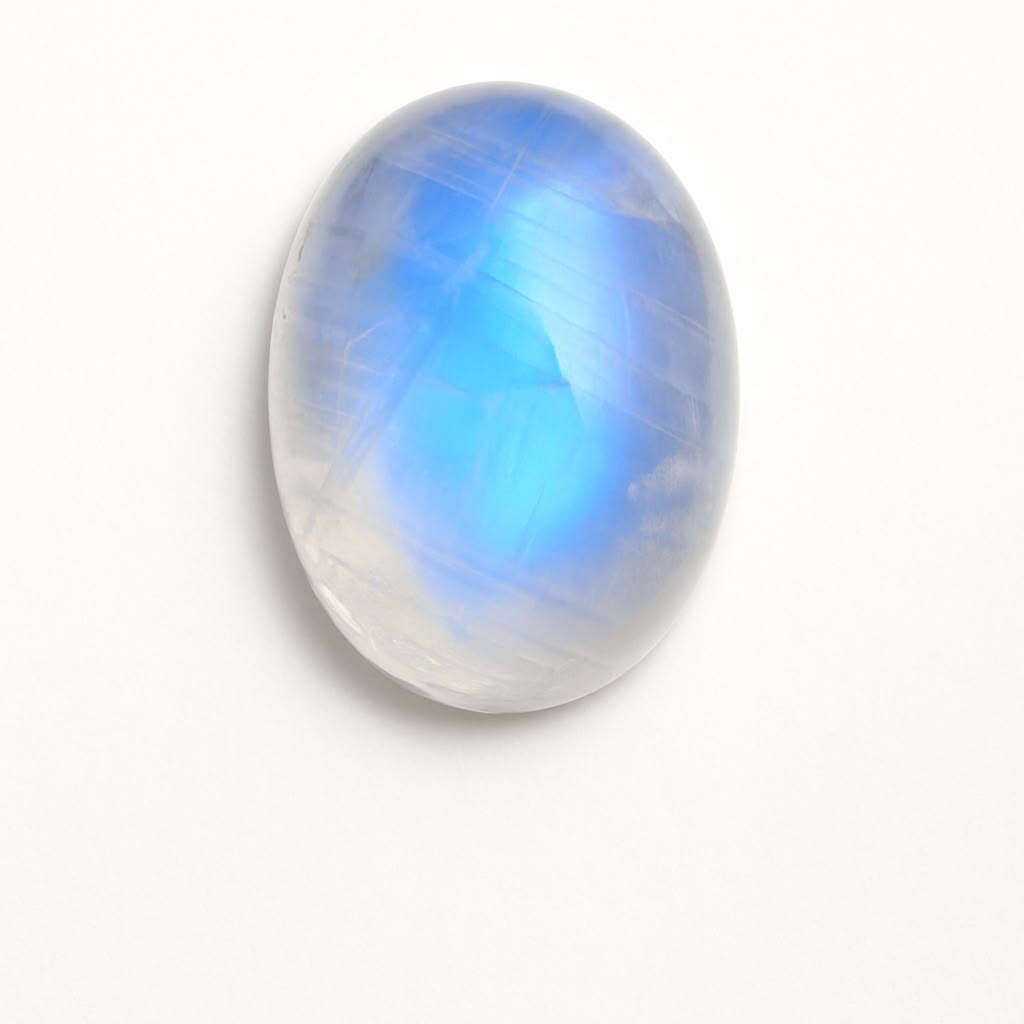
I recall the first time I was given a moonstone and instructed to put it under the light. I found that nothing much, but this soft blue white glow was living across the surface - no bright sparkle or loud noise, just a quiet shimmer that I didn't want to let go of as quickly as I should.
That is moonstone in a nutshell, really. It does not try to impress you the way a diamond does. It just glows and somehow that ends up being enough.
Most people land on this stone with the same handful of questions floating around in their head - whether it is even real, whether it is just opal under a different name, why one moonstone looks nothing like the next one sitting right beside it. Fair enough, moonstone does get confused with a few other gems constantly, so let's actually sort through this properly instead of dancing around it for three paragraphs.
Moonstone sits in the feldspar mineral family, technically speaking. The term moonstone feldspar you see floating around online is just referring to this - usually orthoclase feldspar, though some varieties come from oligoclase instead. Either way it comes straight out of the ground, nobody's growing this stuff in a lab somewhere.
And yeah, moonstone is a real gemstone - a fully natural one formed the same way sapphire or emerald forms, just with a completely different mineral makeup and honestly a totally different vibe once it's cut and polished.
People often assume moonstone and opal are basically cousins, probably because both have that glowy thing going on, but they are not the same at all. Opal is a mineraloid made of tiny silica spheres and its rainbow flash comes from light bending through those spheres. Moonstone is not the same as opal - it does something else entirely, which is honestly the more interesting part of this whole thing.
Ask any old gem dealer and they will tell you Sri Lanka makes the best moonstone on earth, and they are not exaggerating one bit. The moonstone origin story mostly centers there, though India, Myanmar, Madagascar, parts of the US and a few spots in Europe also produce their own supply.
Sri Lankan stones usually come out more transparent with that cooler bluish tint, which is exactly why they cost more. Stones from elsewhere can look cloudier, greyer - not worse necessarily, just a different personality I guess, if a rock can have one of those.
This is where things actually get interesting, because moonstone isn't one single look, not even close.
Blue moonstone is the classic, the one everyone pictures first. Clear or slightly grey body, blue flash sitting just under the surface.
White moonstone runs milkier, more opaque, softer glow overall, and it's usually cheaper too, which makes it a solid pick for everyday moonstone jewelry if you don't feel like spending a small fortune on something you will wear five days a week anyway.
Peach moonstone has been having a moment lately. Warm tones instead of cool ones - orange, peach, sometimes a hint of gold running through the body. Younger buyers seem drawn to this one specifically, at least from what I have noticed on the sales floor.
Then there is rainbow moonstone, which causes more confusion than every other variety combined. Technically it is not even the same mineral family as classic moonstone - it is plagioclase feldspar, mineralogically closer to labradorite. So the difference between moonstone and rainbow moonstone comes down to this: rainbow moonstone flashes multiple colors, blue, pink, sometimes a bit of green, instead of that single soft glow real moonstone carries.
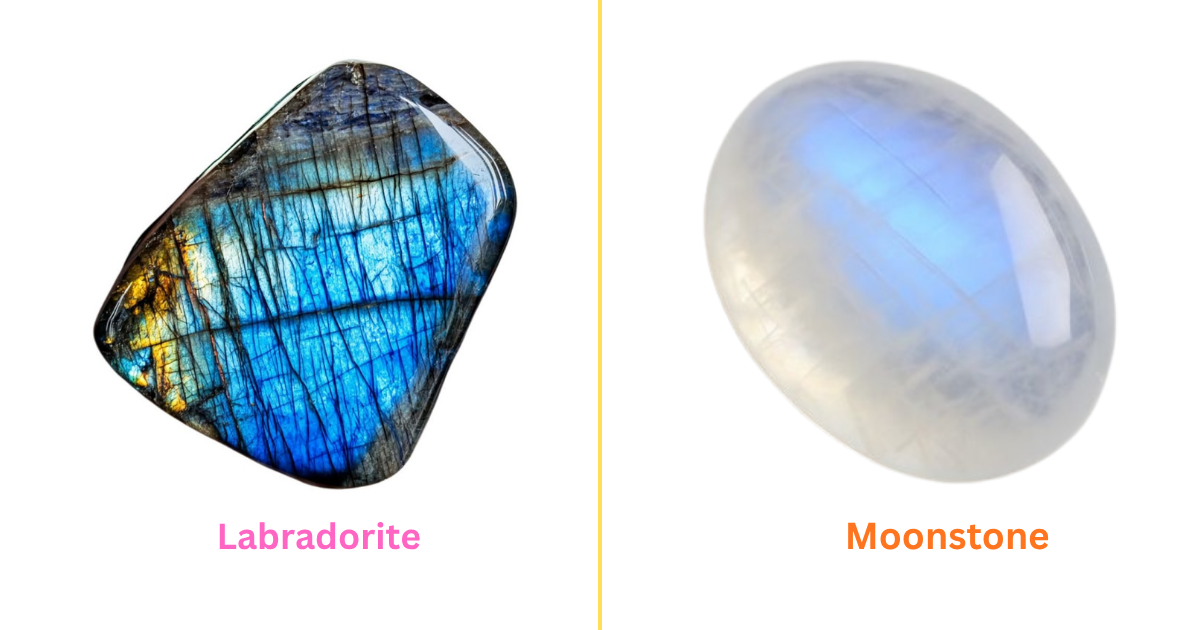
Which rolls straight into the rainbow moonstone vs moonstone comparison and also moonstone vs labradorite, since people mix these up all the time too. Labradorite tends to have a darker body with bigger, bolder flashes. Moonstone stays subtle, understated, quieter about the whole thing. Once you have seen both sitting next to each other you genuinely won't confuse them again.
Put all these moonstone varieties side by side and there is something for pretty much everyone here - cool blue for the traditionalists, peach if you want something a little different, rainbow if you just want more color happening on your finger.
The moonstone meaning has not shifted much across centuries, which honestly says a lot on its own. It has long been called the stone of new beginnings, tied to fresh starts, calm, emotional clarity. Roman folklore claimed it literally formed from solidified moonlight - sounds a little dramatic, sure, but it explains why the lunar connection stuck around this long.
On the spiritual side, moonstone spiritual meaning usually circles feminine energy, intuition, emotional healing, that sort of territory. People connect it a lot with the moonstone chakra, mostly the crown or third eye, based on the idea that it quiets mental noise and sharpens intuition over time.
As for moonstone healing properties - these come from crystal healing tradition more than any clinical study and people keep choosing this stone for exactly that reason anyway. Reducing anxiety. Supporting emotional shifts. A sense of calm during big changes. Whether that is placebo or something more, it honestly is not really the point for most buyers walking into a store.
Moonstone is the official birthstone for June, alongside pearl and alexandrite and this comes up constantly in searches. As for the zodiac side of things, moonstone is most associated with Cancer, since the moon rules that sign directly. Libra gets mentioned sometimes too as a supportive stone, but Cancer remains the primary link by a wide margin.
Here is where things get a bit different from what most gemstone blogs will tell you. In Vedic astrology, moonstone is closely tied to the Moon or Chandra and it is often recommended when someone's Moon placement in their kundli needs strengthening - usually when it comes to emotional stability, mental peace or intuition related struggles. But this is not something you just decide on your own after reading a blog post, no matter how detailed it is.
The Moon behaves differently in every chart. Someone with a weak Moon in the 4th house might need a completely different approach than someone with an afflicted Moon in the 12th house, even if both people are technically dealing with anxiety or restlessness. Wearing moonstone without checking your actual placement can sometimes do nothing at all, and in a few cases, it can even work against what you actually need astrologically.
This is exactly the kind of thing we look at during a kundli analysis - whether moonstone is even the right stone for your chart, and if it is, which type suits your specific placement best. Sometimes it is blue moonstone, sometimes white, occasionally we'd suggest against moonstone entirely and point toward a different gem based on how the Moon sits with other planets in your chart.
If you have been considering moonstone because of its calming reputation, it is worth getting a proper reading first rather than guessing. We offer a free gemstone consultation where we look at your birth details and tell you honestly whether moonstone fits your chart or not, no pressure either way. And if you want the fuller picture - how your Moon interacts with your other planets, your dashas, what remedies actually apply to you - that is covered under our Maha-Vishleshan deep analysis, which goes well beyond just picking a stone.
This is usually where people get stuck. Not on what moonstone is, but on how to wear moonstone jewelry without it feeling weird or mismatched against everything else in the closet.
It is actually one of the easier stones to style, if I am honest. For how to style moonstone rings, keep the setting simple - a single moonstone on a thin silver band basically goes with anything, jeans, sarees, kurtas, even formal wear if the design's clean enough to begin with.
Everyday moonstone jewelry usually just means small stud earrings or a plain pendant, nothing loud, something you forget you are even wearing, and that is genuinely the best kind of jewelry in my opinion.
Most people go for natural moonstone jewelry set in moonstone 925 silver jewelry rather than gold, mostly because silver's cooler tone brings out that blue-white shimmer far better. For a basic moonstone necklace guide, keep it simple to start - one stone, a delicate chain, nothing fussy, and it will go with almost everything you already own.
One thing nobody mentions upfront - moonstone is soft compared to something like sapphire, so skip wearing rings while cleaning, gardening or doing anything that involves your hands banging into stuff all day. Store pieces separately too, away from harder stones, so nothing scratches over time.
Anyone looking into moonstone jewelry wholesale or just trying not to get overcharged as a regular buyer, should always ask for a proper moonstone gemstone guide or certification, especially with higher end blue moonstone pieces where the price jump can be significant.
A solid moonstone gemstone shows clean adularescence, no obvious cracks, even color throughout with nothing patchy. And here is the thing worth remembering - if what is in front of you flashes multiple colors instead of one soft glow, that is probably rainbow moonstone, not the classic stuff, and the price tag should reflect that difference. Don't let anyone talk you into blue moonstone pricing for something that is not actually blue moonstone.
What moonstone symbolizes, at the end of all this, mostly comes down to change. Gentle change. New starts. A kind of quiet strength that does not need to announce itself to anyone. It is not built to grab attention the way a diamond is, but once someone notices that glow, they can not really stop looking at it. I know I couldn't, that very first time someone put one in my hand.
It is a natural mineral and is mined in a similar fashion to sapphires and emeralds. Genuine moonstone is not synthetic, although the quality varies based on the stones' origin and their level of cleanliness.
The classic moonstone will have one soft glow, typically blue or white, while the rainbow moonstone will flash multiple colors simultaneously - blues, pinks and possibly some green in there. It is actually more like labradorite than moonstone, but it is marketed as such in most jewelers.
If you're wearing moonstone for fashion, you can wear it on any finger. In Vedic astrology, the recommended finger depends on your birth chart and should be determined by an astrologer rather than following a general rule.
Moonstone can be worn as jewelry by anyone. However, if you're wearing it for astrological benefits, it's best to consult a Vedic astrologer first, as the Moon's placement differs in every horoscope.
Sri Lanka is widely known for producing the highest-quality blue moonstones with excellent transparency and a strong blue sheen. India, Madagascar, Myanmar, and Tanzania also produce beautiful natural moonstones.
Blue moonstone has a transparent body with a noticeable blue glow, making it more valuable. White moonstone is milkier, more opaque, and generally more affordable for everyday jewelry.
The price depends on quality, origin, clarity, and the strength of its adularescence. Fine-quality blue moonstones from Sri Lanka are typically more expensive than white or peach moonstones.
Yes, for fashion purposes it pairs well with many gemstones. For astrological use, gemstone combinations should only be chosen after reviewing your birth chart, as certain planetary stones may not be suitable together.
Clean moonstone with lukewarm water, mild soap, and a soft cloth. Avoid ultrasonic cleaners, harsh chemicals, and prolonged exposure to extreme heat to maintain its natural shine.
The gemstone itself does not lose its natural glow. However, dirt, oil, and surface scratches can reduce its appearance, so regular gentle cleaning helps preserve its beauty.
Yes. Moonstone is one of the official birthstones for June, alongside pearl and alexandrite. It is a popular choice for people born in June because of its timeless appearance and symbolic meaning.
Sterling silver (925 silver) is the most popular choice because it enhances moonstone's cool blue-white glow. White gold and platinum are also excellent options for a more premium look.
Moonstone symbolizes new beginnings, intuition, emotional balance, inner peace, and feminine energy. Across many cultures, it has long been associated with the calming influence of the moon.
Yes. If you're purchasing a valuable moonstone, especially for astrological purposes or as a long-term investment, choose a certified natural gemstone from a reputable seller to verify its authenticity and quality.
Need guidance or a personal consultation? Share your query with our team and we will get back to you with the right advice and support.
Contact Us
Introduction Choosing a jewelry supplier looks easy until you actually start...
Quick Answer To buy safely from a wholesale 925 sterling silver jewellery man...
Same family, wildly different personality - that's the short answer to moons...
Another meaningful change is underway in India's jewellery market as the Bur...
Discover our handcrafted silver treasures and add something beautiful.
Explore Collections