How to Choose the Right Wholesale Fashion Jewelry Supplier?
Introduction Choosing a jewelry supplier looks easy until you actually start...

By GR Silver Designs International | 9th July 2026
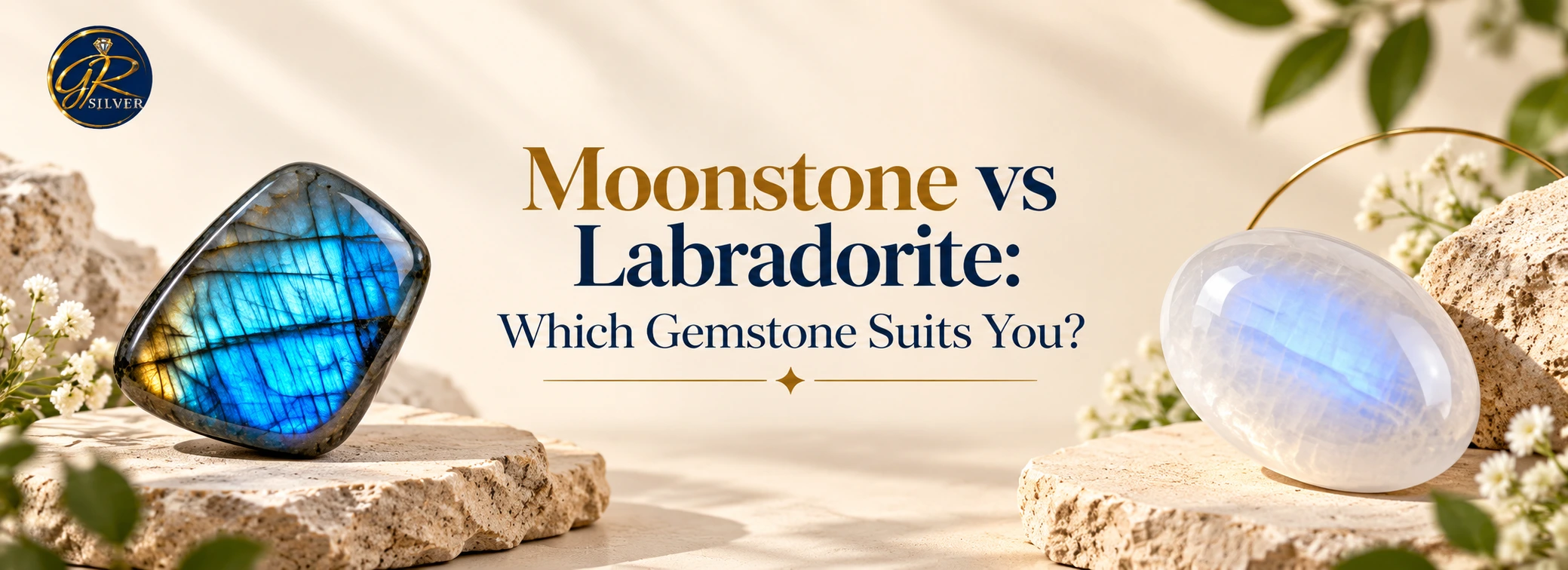
Same family, wildly different personality - that's the short answer to moonstone vs labradorite, if you only have a second to read this. People mix them up constantly, usually because they're feldspar cousins and, in bad lighting or a blurry listing photo, they can genuinely look alike.
But not in person. Hold one in each hand for ten seconds and labradorite vs moonstone stops being confusing pretty fast. Moonstone just kind of glows, quietly, no matter how you're holding it. Labradorite does the opposite thing - flashes hard, then goes flat grey the second the angle's wrong. Different stone, different mood, different reason you'd pick it up off a shelf.
They're both feldspar, that's the whole family connection, part of the same feldspar gemstone family, and honestly that's about as far as the similarity goes once you actually look closely.
Moonstone's glow is called adularescence (say that three times fast). It's a soft blue-white haze that sits under the surface and drifts gently as the stone turns nothing sharp about it. Labradorite works differently. Its effect has its own name, labradorescence, and it's a much punchier thing, blue or green or gold flashing hard within a narrow band of angles, then basically vanishing if you tilt past that window. Adularescence vs labradorescence sounds like a tongue twister but really, it's just "soft glow" vs "sharp flash," dressed up in gemology terms.
Color's usually the fastest tell, in my experience anyway. Pale, milky, white grey or peach base? Moonstone - that's moonstone color meaning right there. Dark, almost black base with color cutting through it? Labradorite, and that's the labradorite color flash people are talking about when they describe it.
Hardness barely factors in as a decision point, for what it's worth. Moonstone hardness runs about 6 to 6.5 Mohs, labradorite hardness is basically the same range. So don't let "which is tougher" be the thing that decides it for you, because it won't, they're nearly identical there.
|
|
Moonstone |
Labradorite |
|
Optical effect |
Adularescence |
Labradorescence |
|
Base color |
White, grey, peach |
Dark grey to black |
|
Flash |
Pale blue-white |
Blue, green, gold, sometimes purple |
|
Hardness |
~6–6.5 Mohs |
~6–6.5 Mohs |
|
Family |
Feldspar |
Feldspar |
This is the part where the two stones stop being cousins and start feeling like opposites, even to people who don't buy into crystal meanings at all.
Labradorite meaning gets tied to protection and transformation almost every time it comes up. It's the stone people grab mid-change, when things feel a bit unsteady and they want something that feels like armor. Ask anyone into this stuff for the best crystal for protection and nine times out of ten labradorite's the answer. On the labradorite chakra side, people generally point it toward the third eye - sometimes the throat too - tied to intuition and to actually getting your words out clearly instead of tangled.
Moonstone healing properties land somewhere gentler. Less "shield," more "settle" - emotional balance, fresh starts, that kind of thing. Intuition's still part of it, just quieter, more about noticing than defending. Moonstone chakra talk usually goes crown or sacral depending who you ask, tied to emotional flow rather than protection. If someone's hunting specifically for the best stone for intuition, moonstone comes up right alongside labradorite, just working the idea from the softer end.
Plenty of overlap too, worth being honest about that. Labradorite healing properties and what people say about moonstone both get connected to intuition. Both show up in people's pockets during rough patches. The real difference is tone - labradorite active, moonstone receptive - not really substance.
Zodiac-wise: moonstone usually pairs with Cancer (moon connection, makes sense) and labradorite tends toward Scorpio and Leo, signs people associate with intensity and change. None of it's science, obviously, but that's the moonstone vs labradorite zodiac pairing you'll keep running into if you go looking.
Which is better moonstone or labradorite - wrong question honestly, they're not even trying to do the same job.
Want quiet? Moonstone jewelry. Wears well every day, doesn't clash with anything you own, glow's subtle enough most people won't clock the stone, they'll just think it looks nice.
Want a reaction? Labradorite. Shifts as you move, gets noticed, gets asked about. Suits someone who wants their jewelry doing a bit of the talking for them.
Broadly, for moonstone or labradorite for jewelry: rings, pendants, earrings, both hold up fine in any of those. Labradorite needs surface area to really flash, so bigger pieces show it off better. Moonstone doesn't care much about scale, even a tiny stud still glows. Labradorite beads on a bracelet or long necklace often beat a single big stone, since the flash keeps shifting bead to bead as it catches the light differently down the length of it.
Is rainbow moonstone the same as labradorite?
Close, not identical. Rainbow moonstone vs labradorite is really about origin - rainbow moonstone is technically a labradorite feldspar variety with a blue sheen, while what people usually just call "moonstone" is a different feldspar species altogether. So it's kind of stuck in the middle, closer to labradorite by classification, but sold and worn like moonstone.
Is labradorite more expensive than moonstone?
Usually, yeah, especially anything with a strong, saturated flash. Basic moonstone stays pretty affordable most of the time. High flash labradorite in a bigger size, though, that can climb fast.
Can you wear moonstone and labradorite together?
Go for it, nothing stopping you. Same mineral family, they pair naturally, and honestly a lot of people layer them on purpose - moonstone for softness, labradorite to sharpen it up.
How to tell moonstone and labradorite apart?
Base color's the fastest tell - pale and milky is moonstone, dark and almost black is labradorite. After that, tilt it. Moonstone barely changes with angle. Labradorite's flash is sharp and mostly gone once you're outside that narrow window.
Is moonstone a type of labradorite?
Nope. Two separate feldspar minerals, not a parent stone and its variety. Same broad family, which is exactly why the mix up happens so often, but moonstone isn't a labradorite subtype the way rainbow moonstone technically counts as one.
Which is more durable moonstone or labradorite?
That's basically a tie, both sit around 6 to 6.5 Mohs. Comes down to how you take care of it more than which one you picked, either stone scratches if you're careless.
Need guidance or a personal consultation? Share your query with our team and we will get back to you with the right advice and support.
Contact Us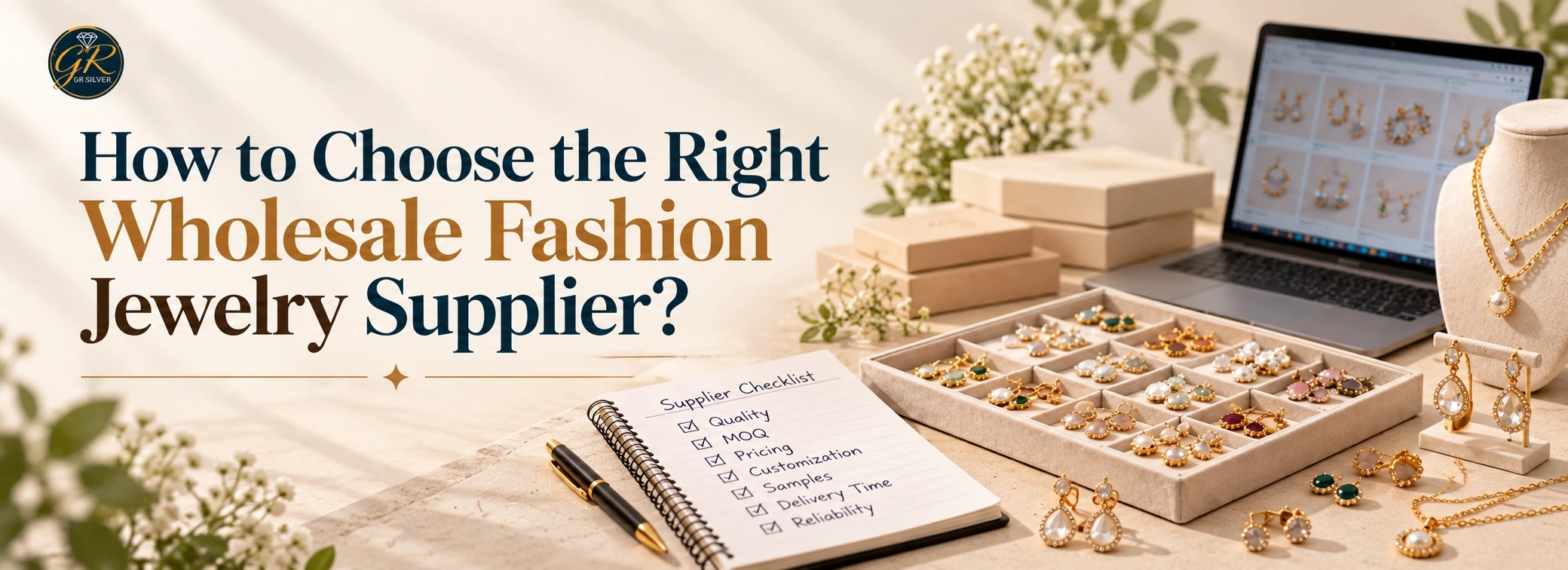
Introduction Choosing a jewelry supplier looks easy until you actually start...
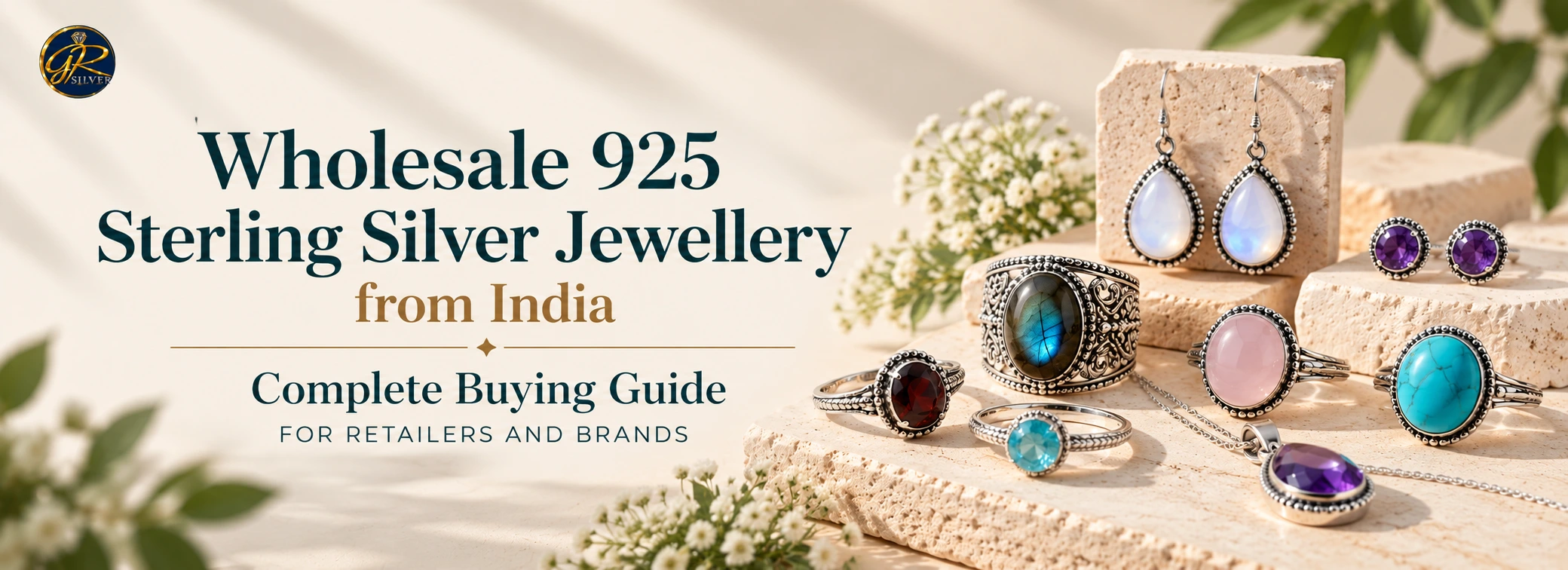
Quick Answer To buy safely from a wholesale 925 sterling silver jewellery man...
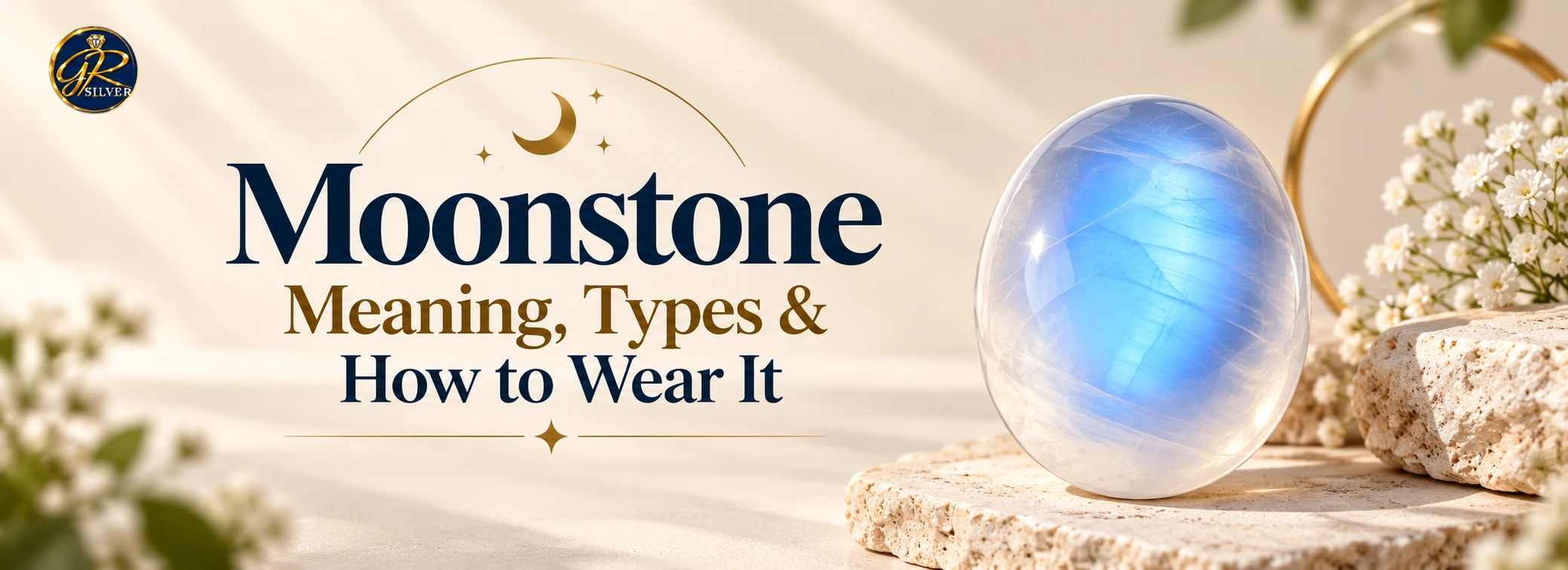
I recall the first time I was given a moonstone and instructed to put it under t...
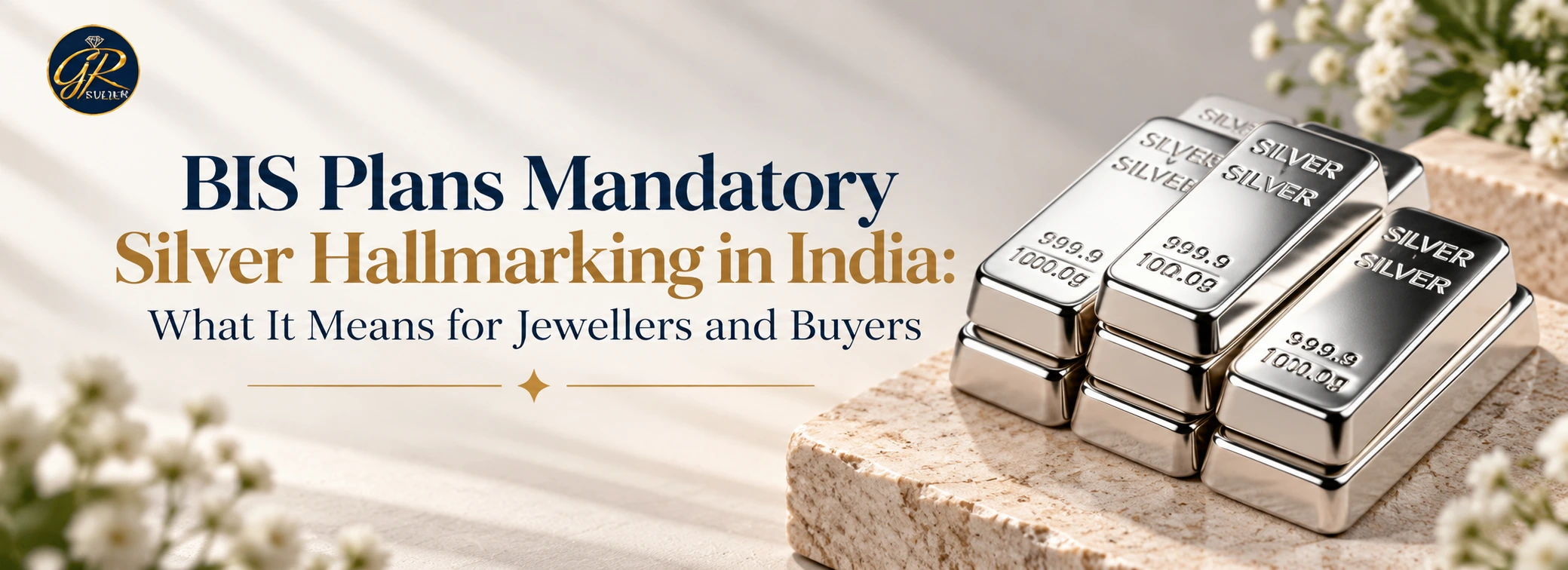
Another meaningful change is underway in India's jewellery market as the Bur...
Discover our handcrafted silver treasures and add something beautiful.
Explore Collections